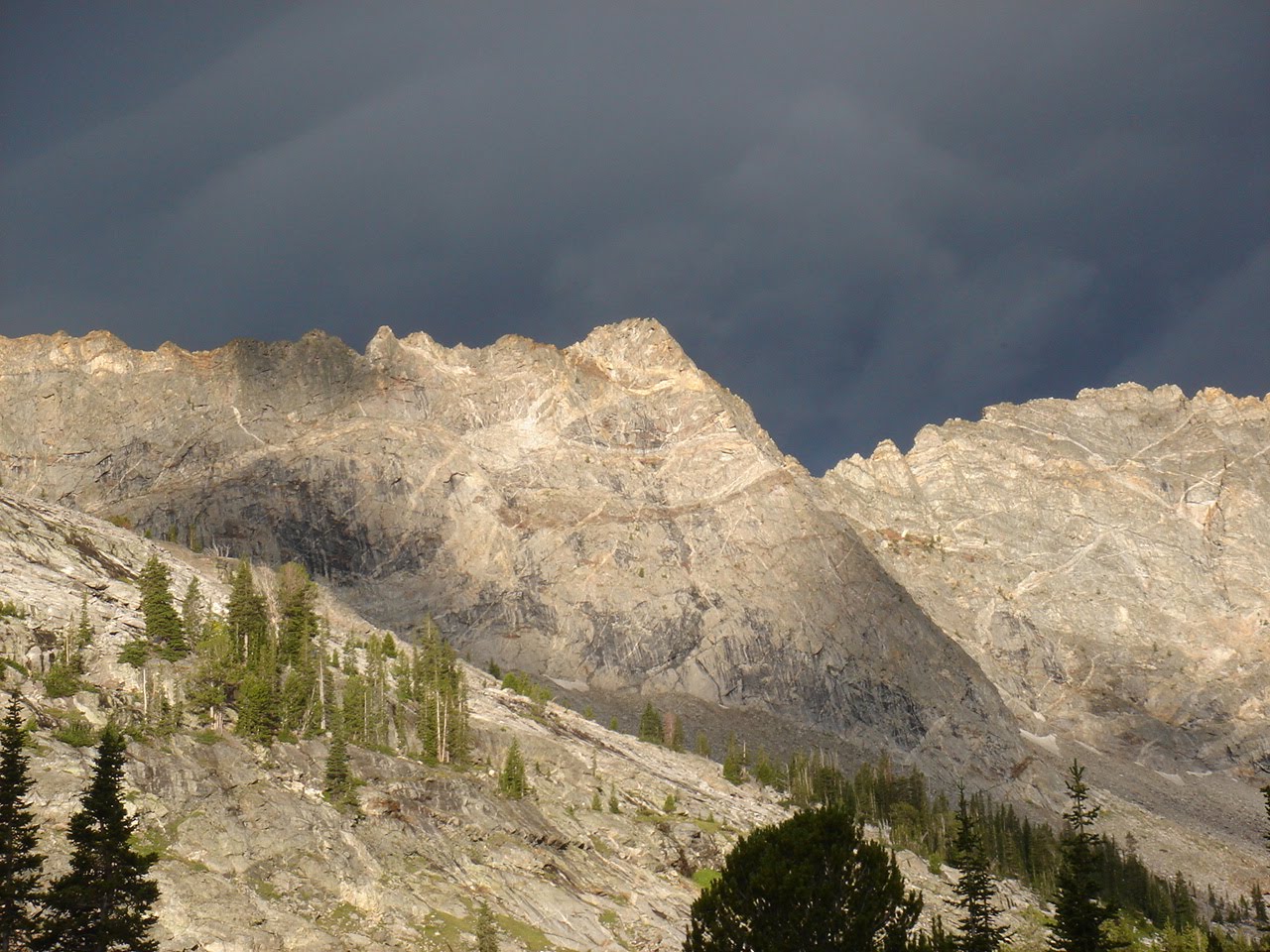
Sunday, October 10, 2010

Cascade Climbs Part 3: In Deep on the North Ridge of Mt. Stuart

With success on Mt. Baker and Mt. Shuksan, Drew and I were eager to keep the send train rollin'. Little did we know that the North Cascades were going to hand us an extra large serving of Humble Pie!


After drying out in the hotel in Bellingham, Drew and I decided to head in to Boston Basin for a brief weather window and climb the Torment - Forbidden Traverse. We got absolutely soaked and muddy on the approach into Boston Basin and it wasn't even raining! If you have done this approach, you know exactly what I'm talking about. We slept through a wet night only to hear rain on the tent as the alarm went off at 4am. After sleeping in, we had a casual breakfast with multiple coffees as the wetness continued. At 11am we changed our objective and decided to try the popular West Ridge of Forbidden. We navigated the glacier approach in full whiteout conditions and standing at the base of the route, staring into the mist we determined that the forecasted weather window wasn't coming and we were tired of being wet! 
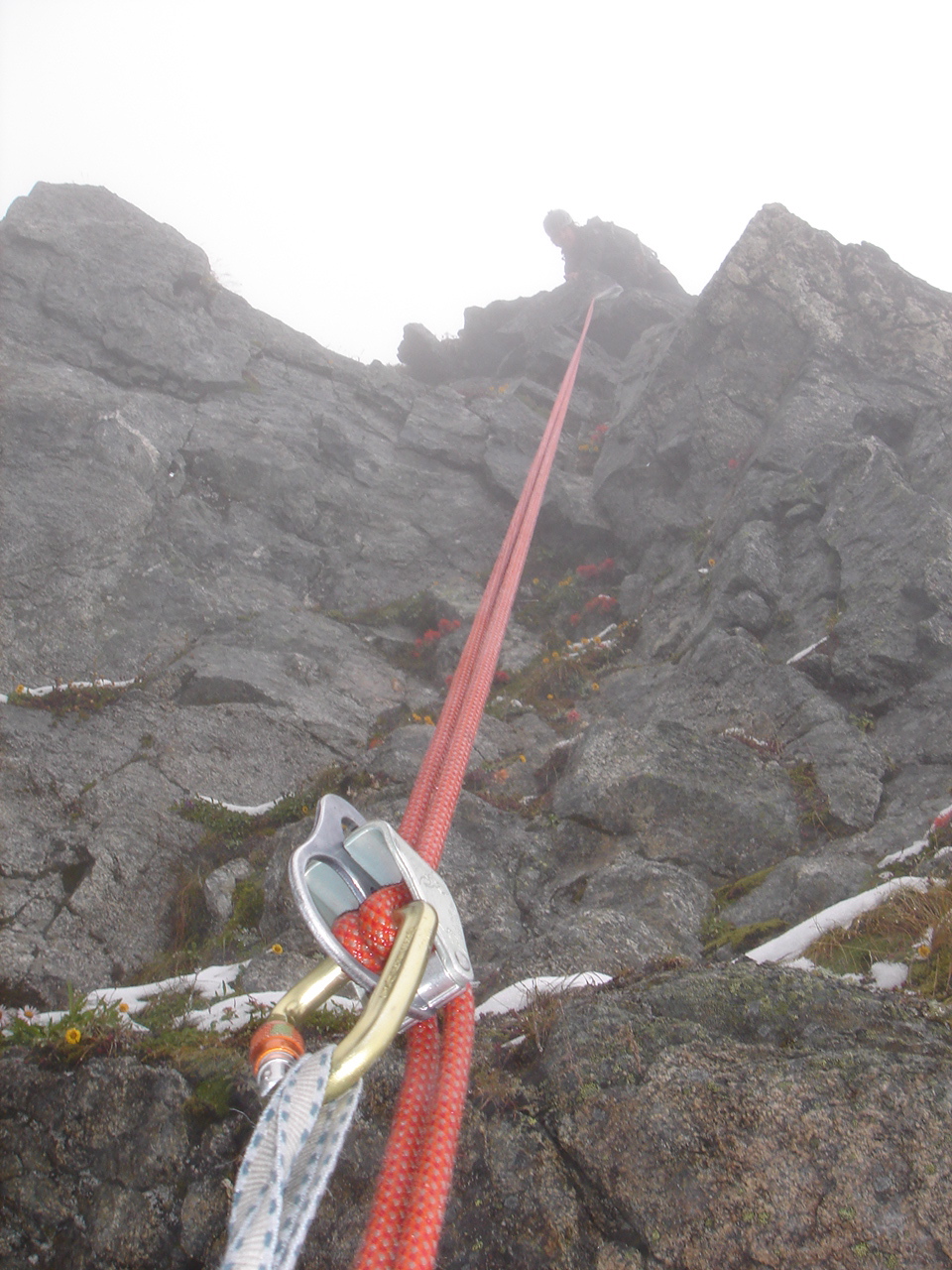


We bailed, packed up, sketched down the trail and checked in to the hotel in Bellingham!


 I was getting tired of the rain. Nothing was drying out. We only had three days left before my Advanced Alpine Guides Course started and we needed another objective. After checking the weather forecast and brainstorming with guide books, Drew and I decided to climb the North Ridge of Mt. Stuart.
Mt. Stuart dominates the southern end of the North Cascades. Being on the southeast side of the range means that it generally gets less precipitation. The North Ridge is a long committing alpine climb a days hike in from any trailhead. We chose to approach from the south, camping at Lake Ingals the night before. The full North Ridge is Grade V, 5.7-5.9 with up to 30 pitches of alpine ridge climbing. The standard descent is down the Cascadian Couloir to the south. No matter how you approach the North Ridge, you're going to have to walk around the mountain either to get home or get on the route. 


Lake Ingals and our camp south of Mt. Stuart.


We chose to climb the popular upper North Ridge (grade IV, 5.7-5.9) which crosses the Stuart Glacier and climbs a small couloir to gain the ridge at about half height. Here you can see the upper ridge in profile as we crossed the Stuart Glacier. The approach couloir is visible on the lower left, and the Gendarme is on the skyline at about half height. The Gendarme has two pitches of 5.9 climbing and requires a bigger rack. Our plan was to avoid the Gendarme by climbing around it, moving with a lighter alpine rack and climbing in mountain boots instead of rock shoes. Little did we realize when planning for the climb that all the precipitation we experienced in Boston Basin would translate to a significant amount of snow and ice on the north side of Mt. Stuart.


Some perspective on the scale of things... here I am approaching the "small couloir" which provides access to the upper North Ridge.


Drew and I have done a number of alpine ridge routes and I think we figured this would be a fairly straight forward ascent of one of the 50 Classic Climbs. I was a little surprised when the terrain and conditions dictated that we pull the rope out in the couloir. I had anticipated cruising through this unroped and moving quickly. Was this a sign of things to come???


Once on the ridge we removed our crampons for a stint and enjoyed the sun.  


Pitch after pitch fell away as we climbed splitter granite with snow on the ledges and some wet rock here  and there. The higher we climbed, the more wet rock we encountered. After several spicy leads it became clear that we were going to have to put crampons back on.


Here I'm leading a wet and snowy crack that would be easy fifth class when dry. The crack widened beyond the size of our gear and I had to run it out another 50' to the next belay. Like much of the wet climbing below, I found this pitch a demanding lead. 
The Gendarme looms overhead and our anxiety was building. Due to the conditions we were finding on the ridge, I began to question whether or not we were going to be able to bypass the Gendarme. The route around requires a rappel off the north side of the ridge into a gully, and then several more pitches of easy fifth class rock. 


The conditions on the north side of the ridge did not look inviting at all. Occasionally I would sneak a glance over the edge as we continued to climb towards the Gendarme. I pushed all thoughts and fears away in hopes that our route around would be obvious and less intimidating. 

Several more pitches landed Drew and I at the base of the great Gendarme... our fears were realized. Here we were 12+ pitches up the North Ridge of Mt. Stuart. Climbing along the ridge was blocked by 5.9 climbing on the Gendarme. We had neither the protection nor rock shoes to attempt to the route; not to mention the cracks were visibly iced up. A descent down the ridge would mean essentially loosing our light rack as we would have to build rap anchors the entire way way down. This would take all day and would be, at the very least, complicated. Also, our camp was on the other side of the mountain and a retreat down the north side would mean retracing our approach to the south. The other option was to commit to the snow and ice gully. We had no ice protection, only crampons and a single snow axe each. Up to this point the climbing had been made more difficult by the snow. Looking into the gully and seeing only snow, ice and rock we were reluctant to leave the ridge...


Drew and I discussed our options. We decided that he would lower me into the gully to test the conditions. If they weren't good, I could potentially climb out and we would start our descent down the ridge. If the conditions were good, he would rappel to me and we'd continue up the gully. 
Constant sluffing had firmed up the snow so that I was front pointing every step. This was much better than I had imagined. I pictured shallow, weak, unconsolidated snow covering steep rock. I built an anchor and shouted up to Drew that it was a go. He rappelled and pulled the ropes. We were now committed to the gully, with retreat back to the ridge not too feasable.


I lead a run-out traversing pitch, slinging icicles as I went. Although the climbing was not difficult, I only managed three pieces of protection in 160' - two of which were slung icicles and more mental pro than anything else. The thought of a slip rang in my mind as spindrift and ice occasionally showered down from above. I kept telling myself that if I did fall, curl into a ball to try and prevent a crampon from snapping an ankle!

Drew followed the pitch and lead another demanding snow and rock pitch that brought us to easier terrain. We began to feel that the difficulties were behind us, but it was getting late and we still had 400'+ to the summit.


Through out the day I kept hearing what I thought were voices. I would scan the north side and determine we were the only ones on the mountain that day. Initially Drew did not hear them, but as we climbed higher, he too thought he heard something. There are lots of mountaineering tales where climbers talk about hearing voices or feeling a presence of another high on some remote peak. I began to wonder if we had pushed ourselves to the point where the spirits of the mountain had begun talking to us!


As the summit grew near, a clear and distinctive voice rang out: "Holy Sh*t! There are climbers down there!". We looked up to see someone standing on the summit block, silhouetted in the afternoon light. He gave us a wave and watched as we climbed steep snow and ice. Only a few hundred feet separated us, but we were a world apart in the shadow of the mountain.


Drew and I summited at 4pm, 10 hours after leaving camp that morning. Our initial plan was to return to Lake Ingals, pack up and hike out. On the descent, it became apparent that although possible, it would be better to sleep another night at camp and return to the trailhead in the morning. We had some food still and a restful sleep sounded a lot more inviting than hiking 4.5 miles at night just to get to the car. 
We began boogying off the summit towards the Cascadian Couloir. Route finding was made easy by the  scramblers who had ascended that way earlier. We caught up to them, chatted a bit and learned that there were several parties who had ascended or attempted to ascend the Cascadian Couloir that day. We blasted by several folks in the couloir on the way down, and after 4000'+ we hit the trail and had to hike back up to Lake Ingals and our camp. We arrived at camp just as the light was fading and collapsed in exhaustion. As we took off our boots and rummaged through gear we heard the distinctive sound of a helicopter approaching. We watched as a rescue helicopter hovered around the base of the Cascadian Couloir for about 30 minutes. We could see lights on the hillside signaling to the helicopter, but it soon grew dark and the ship flew away. In the morning, as we hiked out out, the helicopter returned and hopefully were able to complete their rescue.
Drew and I both agreed that our ascent of the North Ridge of Mt. Stuart was one of the more committing climbs we had done. I felt fortunate to have succeeded and humbled by the conditions and terrain we encountered. We have not heard about the rescue that day but my hopes are that everyone is OK. 

Thanks Drew for sharing the rope with me (and the great photos), and Thank You Mt. Stuart for the experience and allowing us to summit and return safely!


Monday, September 20, 2010

Cascade Climbs Part 2: The Fisher Chimneys to the South East Ridge of Mt Shuksan


After returning from Mt Baker, Drew and I drove to the little town of Maple Falls to recharge our batteries, make some phone calls to loved ones and attempt to dry our rope and boots out. We spent the better part of the day in the parking lot of a cafe, leaching off their WiFi and drinking way too much coffee. By afternoon we were ready to for the next adventure, despite a forecast for showers. 

We made the approach in to Lake Ann that evening and got there just in time to catch a glimpse of the Curtis Glaciers and Mt Shuksan obscured by a few clouds.


It was Labor Day weekend, and there were several tents at the lake, but we managed to find a nice site and settled in for the night. At 4 am the alarm went off and we began brewing up in the predawn mist.


We were on the trail by 5, figuring that by the time we needed to find the Fisher Chimneys it would just be getting light enough to see. This worked well and we had no trouble finding the start of the chimneys. 


Although the weather was not splitter, the sun periodically filtered through and the light was dramatic. We cruised passed several tents at the base of Winnie's Slide and actually got heckled by a local guide for our quick but unconventional rope practices. Our thoughts were to climb the route and familiarize ourselves with the terrain, not to "mock guide" it. We shrugged of the comment and continued to make good time, following the tracks of those ahead of us.


Once we got to the summit pyramid of Shuksan, we had caught up to all the other parties that had camped on the glacier. Our friend Danny had suggested we climb the South East Ridge instead of the standard south gully. When asked what sort of rack to bring, he said that it we weren't "mock guiding" it we could just cruise up the ridge without pro, as it was easy fifth class. One thing we hadn't thought about was the fact that with all the precipitation, there was several inches of new snow on the route, and things might be a bit more interesting than if it was dry. With all the other parties bottlenecked at the base of the standard route, Drew and I blasted up the South East Ridge in crampons.


We summited at about 11 am, had some lunch on top and watched as two guided parties climbed the last couple pitches of the standard route. When they topped out, we recognized them as folks we'd met the previous morning and chatted about the conditions and best way to descend. Concerned about rockfall in the gully we chose to down climb the standard route instead of rappel and risk pulling rocks down on us or the other parties below. After descending the gully, we were surprised not to encounter any other climbers. Turns out they had retreated due to conditions.


We retraced our steps back to Lake Ann, packed up and hiked the 4.5 miles back to the car. Another great day in the Cascades with conditions starting to get a little wet. Interestingly enough, only guides and guided parties summitted Mt Shuksan that day!


A toast to Mt Shuksan!

Tuesday, September 7, 2010

North Ridge of Mt. Baker POV

Cascade Climbs Part 1: The North Ridge of Mt Baker


With my AMGA Advanced Alpine Guides Course and Aspirant Exam coming up, I headed to the North Cascades with fellow SMG guide, Drew Daly, to familiarize myself with the terrain and get some glacier routes under my belt. Drew has had quite a summer full of alpine routes in our home mountains of south central Idaho, and was eager to continue his bender in the Cascades. 

First on our agenda was the North Ridge of Mt Baker. We met up with fellow Idahoan and local Cascade guide, Danny Uhlmann, in Bellingham and got some beta on the route. Danny suggested we start our climb with a slightly different approach then the typical Hogback Camp/Coleman Glacier route. Instead, we were to camp lower in the dense Cascade forrest, known as Murkwood, and hop on the toe of the glacier there. 

Treeline is basically at the toe of the glacier and the blue skies and wildflowers were spectacular in the evening light. Reluctantly we left the open air and beauty of treeline and headed down into the dark forrest of Murkwood.


We were up early the following morning and stepped on the glacier just as it was light enough to see.


After several hours of navigating low angled terrain through crevasses, we arrived at the toe of the North Ridge. There are basically two options here, the Low Route and the High Route. The High Route looked impassable due to a melted out bergshrund, so we opted for the Low Route. With a little time spent sussing out our best options, we settled on this approach. What you don't see in this photo is gaping abyss below me and the jumbled blocks we used to cross it... frightening indeed!


Drew taking the second pitch of steep snow and ice of the ridge up to lower angled terrain above.


Our early start meant that the snow was well set up and these 35*-40* slopes demanded focus.


Here's the crux of the route with some other guides just finishing the difficulties.


Pitch one of the ice ridge. Drew took the next lead to the top of the "steep" ice, then we did two more pitches of less steep but hard ice. Close to the summit there were a few more cracks to navigate, but the difficulties of the route were over...


On the summit: 6000' vertical and 7 hours later... and the guide book calls it a Grade III+!!!


Descending the Coleman/Deming Glacier route was a non technical slog. The afternoon sun had warmed up the snow and although tired, we had to be mindful of softening bridges over enormous crevasses. 

We returned to Murkwood, packed up our overnight kit and hiked out to cold beers stashed in the creek at the trailhead. 

Glaciers, crevasses, snow, ice, Murkwood... a perfect introduction to climbing in the North Cascades!
Look for Part 2: Mt Shuksan.

Saturday, September 4, 2010

Middle Fork 2010


My first river trip. The Barron of Leisure a.k.a, 'Alpine Al', showed me how it's done...Alpine Style of course, with no raft support!

Monday, August 16, 2010

Three Routes in Three Days: Alpine Climbing in the Pios

Last week Wolf and I returned to the Pioneer Mountains to explore some of the alpine potential out Kane Creek. Despite 60% chance of showers and thundershowers we got an early start and set up camp at Kane Lake.

The first route on our agenda was recently climbed by friends Drew Daly and Matt Scrivner. We raced up the Irish Arete as clouds darkened the horizon and showers threatened to turn us around.

We found pretty good rock with nice exposure and climbing up to about 5.6-5.7
We picked a non-technical descent and when returning back into the Kane Creek drainage we discovered this wild tunnel! The first thing to cross my mind was to return in winter and ski through this amazing feature!
That evening the thundershowers set in dumped inches of hail and rain on the range while we sat under a tarp and cooked dinner. We had more rain through the night and when the alarm went off at 6am there was that familiar sound of pattering on the tent. We slept in another hour and had a leisurely morning drinking coffee and eating Aki's famous outmeal-buttermilk pancakes while we waited for the rock to dry out.
By 10am things were still a bit wet, so we decided to hike further up the drainage and get a look at the north face of Goat Peak. On our return to camp, the sun came out and we decided to give Kane Creek Spire a go.
Kane Creek Spire only appears to be a spire when viewed from Kane Lake. Behind the spire is a long ridgeline that connects to the main Pioneer divide. We climbed three pitches up the lookers left side of the spire to gain the ridge, then short roped and short pitched along the ridge to reach the second step. Here we encountered 5.8 climbing and three more pitches to gain the knife edge arete above. Several more pitches got us through the technical terrain and then we transitioned for the descent.

Wolf walking the line on the upper arete!

Up and over a gendarme on the lower ridge.

Finishing up the technical section of the upper arete with the lower section and Kane Lake visible in the distance.

The red is our line of ascent while the green is our descent. We moved carefully over loose, slippery, wet rock on the way down and returned late to pack up our camp and head for home after a great adventure in the alpine.
The next day I headed in to Wildhorse to climb Mustang Peak with friend and client Tom U. I hadn't done this route in 6 or 7 years, and was delighted in it's quality.
It was a big day for Mustang Peak, with three parties of two summiting via the Broken Arrow route. We met Pat and Nick from Boise who started their day early by riding their bikes in from the campground to the trailhead! Then, as Tom and I were topping out we spotted SMG guides Drew and Taylor starting up the lower flanks of the peak. Probably one of the busiest days on Mustang Peak ever!
Thanks for the beers Pat and Nick!
Here's to Wolf and Tom for giving me the chance to take them into the high alpine, and here's to Idaho for blessing us with such amazing country so close to home!
Thank you!


Wednesday, August 4, 2010

High Anxiety 5.9, Black Buttress, Sawtooth Mountains

My good friend Toby is in town, and last week we squeezed in a climb of High Anxiety after a half day of guiding in the morning. This is the third time I've climbed this route and it was as good as I had remembered it. The first time was in 1993 when my friend Matt Leidecker and I paddled across Redfish in a canoe, climbed the route and returned home to Ketchum that day. We were 18 and going for it! This time, Toby and I got off the boat at 2pm and were able to return to the lake by 7:30. Not bad, but both of us were slowed by the fact that I had only brought a single set of cams and we kept running out of gear for anchors! Some creative anchor building on both our parts cost us some time...

High Anxiety climbs a left facing corner for 2-3 pitches before moving out onto the face and connecting cracks with fantastic exposure! We topped out with 3 rope stretching pitches plus 2 short 4th class pitches.

Toby cruising through the 5.9 crux of pitch 2.

Splitter Sawtooth granite.

Connecting the dots after the corner ends. This section of the climb has notorious route finding issues... which leads to routes like "Higher Anxiety" and "Highest Anxiety"... it's really not that big a deal with a little bit of beta.

Does 5.8 get any better???

Another Sawtooth obscure classic, the Black Buttress!
Thanks Toby for a great day in the mountains.